Micro Four Thirds cameras are generally considered to have a disadvantage when it comes to achieving strong background blur compared with full-frame cameras at the same angle of view and f-number.
But how much background blur do we actually need to enjoy photography?
When comparing camera systems, we tend to focus on their maximum capabilities. Equally important, however, is understanding how much performance we need for our particular style of photography.
With this in mind, I decided to explore the bokeh capabilities of the OM SYSTEM OM-1 paired with the M.ZUIKO DIGITAL ED 45mm F1.2 PRO, shooting wide open.
Wide-Open Sample Images: OM-1 and 45mm F1.2 PRO
After purchasing the OM-1 from OM SYSTEM, formerly Olympus, I finally managed to configure the camera exactly as I wanted. The following was my first photograph using those settings.
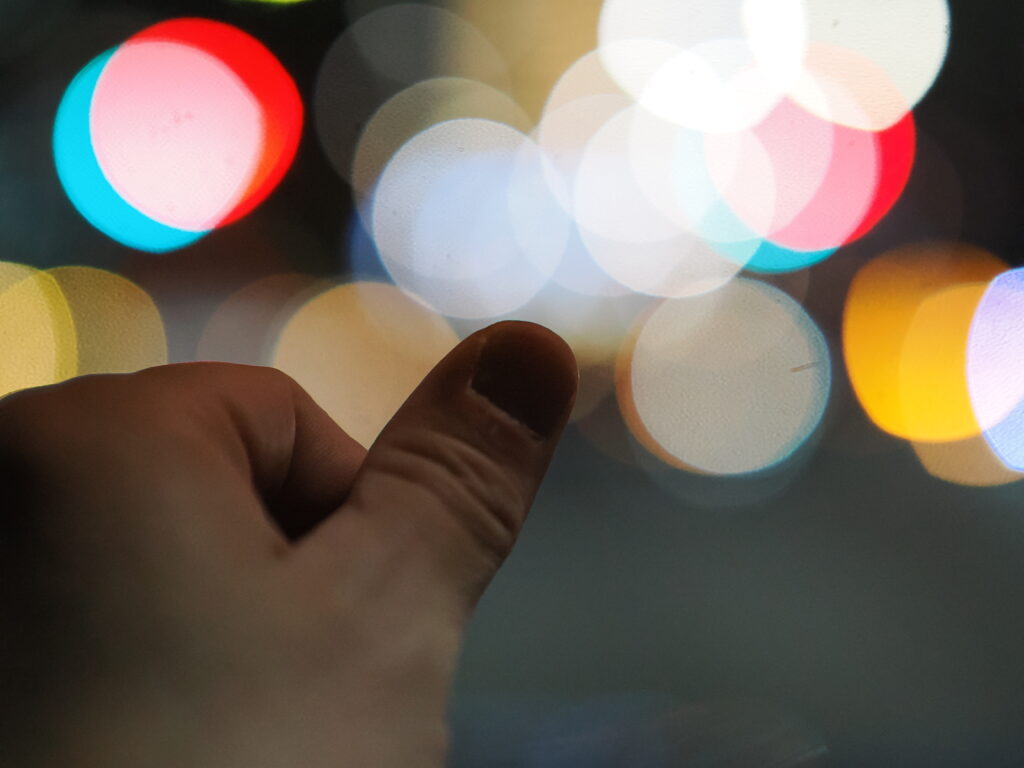
My model was my own left thumb.
I opened the aperture to f/1.2 to achieve as much background blur as possible. The photograph was taken at night and is considerably underexposed, but it gives a good impression of the bokeh this lens can produce.
The following day, I photographed the same subject in daylight, again shooting wide open.
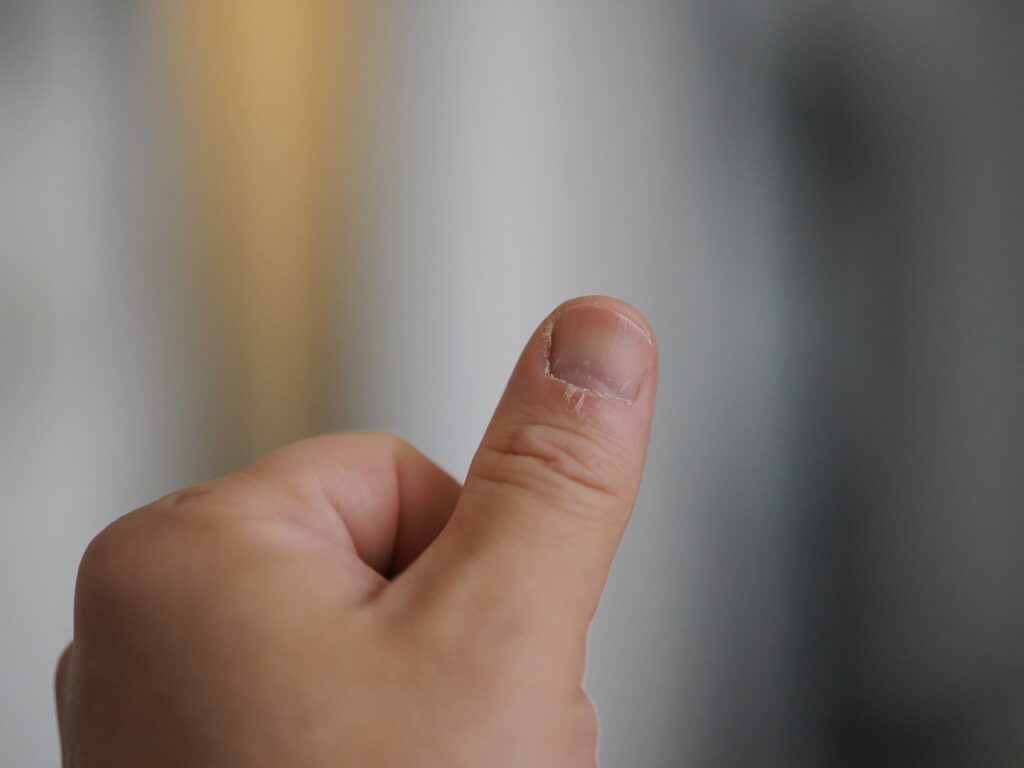
The background simply melts away into smooth, creamy bokeh.
I was genuinely surprised by how beautifully a Micro Four Thirds system could render an out-of-focus background. The sheer pleasure of seeing this bokeh made me want to take more photographs.
How Much Background Blur Do We Really Need?
The amount of background blur depends on several factors, including focal length, aperture, camera-to-subject distance, and the distance between the subject and the background.
A 45mm lens on a Micro Four Thirds camera provides an angle of view equivalent to that of a 90mm lens on a full-frame camera. It is a short telephoto lens particularly well suited to portrait photography.
By shooting wide open at f/1.2, moving closer to the subject, and allowing sufficient distance between the subject and the background, we can achieve substantial background blur, as demonstrated in these sample images.
Background blur helps isolate the subject and directs the viewer’s attention toward what caught the photographer’s eye. Beautiful bokeh also has an aesthetic appeal of its own, as shapes and colors in the background blend smoothly together.
The amount of background blur we need therefore depends on what we want to photograph and how we want to express it.
I intend to take my camera outdoors and use it extensively during a variety of activities. For a camera system intended for that kind of use, this combination of background blur and pleasing bokeh is more than sufficient for my needs.
Understanding how sensor size affects background blur, together with knowing how much blur we actually want in our photographs, helps us make better decisions when choosing camera equipment.
How Digital Technology Has Changed the Photography Experience
Alongside the beautiful bokeh, these simple test shots reminded me of how profoundly digital technology has changed the experience of taking photographs.
Photography in the Film Era
Understanding the relationship between aperture, shutter speed, and film speed was fundamental to photography in the film era.
Once a roll of film was loaded, its sensitivity was effectively fixed. Photographers therefore controlled exposure primarily through aperture and shutter speed, adjusting the lighting when necessary.
The results became available only after the film had been developed.
Photographers relied on their accumulated knowledge and experience to visualize the finished image and choose the appropriate camera settings before releasing the shutter.
Photography in the Digital Era
The knowledge of aperture, shutter speed, and sensitivity acquired during the film era remains valuable in digital photography.
Digital cameras have introduced an additional degree of flexibility: the ability to adjust ISO from one shot to the next.
We can choose an aperture to control depth of field, select a shutter speed to determine how motion is rendered, and adjust ISO to suit the shooting conditions.
The sheer number of settings available on modern digital cameras can make them seem complicated at first. As we become familiar with their operation, however, we gain greater creative control by choosing which settings to manage ourselves and which to leave to the camera’s automatic systems.
Perhaps the most significant change brought about by digital technology is the immediate feedback it provides.
Take a photograph, review it, consider the result, and shoot again.
Repeating this process on the spot allows us to learn through direct experience how changes in camera settings affect the resulting image.
We can also transfer photographs to a smartphone and share them with people around the world in just a few steps.
Capturing, reviewing, refining, and sharing photographs have become part of a single, continuous experience.
For someone who remembers the film era, discovering this new way of enjoying photography felt like a personal “Hello, World!” moment.
The Joy of Photography Arising from Activity
My preferred approach to photography involves capturing scenes and subjects that I encounter while engaged in other activities.
I come across something that catches my attention, reach for my camera, and try to express what I see and feel through a photograph.
For this style of photography, three qualities of a camera system are particularly important:
- Portability: The ability to carry the camera during a wide range of activities.
- Responsiveness: The ability to capture a subject quickly when a photographic opportunity presents itself.
- Creative versatility: The ability to translate what I see and feel into the image I want to create.
The Micro Four Thirds system built around the OM-1 allows for a relatively compact setup, with responsive operation and fast autofocus.
Pairing it with a lens such as the 45mm F1.2 PRO also opens up creative possibilities involving shallow depth of field, strong subject separation, and beautiful bokeh.
The immediate feedback provided by digital photography allows me to experiment with different ways of rendering a subject while I am still there.
Together, these qualities make the OM-1 particularly well suited to my style of photography.
Evaluating a Camera Through the Photography Experience
The value of a camera can be considered from two perspectives: the quality of the photographs it enables us to produce and the photographic opportunities it allows us to pursue.
Portability encourages us to carry a camera more often. Responsiveness increases our chances of capturing the subjects we encounter. Creative versatility expands the range of images we can produce when those opportunities arise.
The immediate feedback of digital photography also turns each photographic opportunity into a learning experience.
My experience with the OM-1 and the 45mm F1.2 PRO has shown me that I can enjoy the portability of Micro Four Thirds while achieving the background blur and bokeh I desire.
A camera system that suits our style of photography allows taking photographs to become a natural part of our everyday activities.
We take a camera along as we pursue the activities we enjoy, discover photographic opportunities along the way, and find that photography makes those activities even more rewarding.
I am delighted to be living in an era when this kind of photography is possible.
Photography really is a wonderful thing.
Explore Other Subjects
English Articles : A Topic-by-Topic Guide to This Site
Photography | Camera Fundamentals, Exposure & Practical Equipment — English Article Guide
Want to know more about the author and the thinking behind this site?
→ About Rikutsu-Kone-Taro
