Introduction
If you are buying your first pleasure boat, one of the most important things to understand is the propulsion system.
For most recreational powerboats, three conventional systems cover a large part of the market:
- Outboard engines
- Inboard engines with shaft drive
- Sterndrives, also called inboard/outboards or I/Os
This article focuses on these three systems. Pod drives such as Volvo Penta IPS, waterjets, and other specialized propulsion systems are outside its scope.
The purpose here is not to declare one system universally superior to the others. Each has advantages and disadvantages that come directly from its mechanical layout.
How the boat will be stored, where it will be used, how shallow the water is, what kind of maintenance is acceptable, and whether the boat is intended mainly for fishing, cruising, swimming, or other activities can all change which propulsion system makes the most sense.
The following comparison is based on my own boating experience, observations, and understanding of these systems.
Outboard Engines
An outboard engine is a complete propulsion unit mounted outside the hull, usually on the transom at the stern.
The engine, gearbox, and propeller are combined into one unit.
Because almost the entire propulsion system is outside the boat, access for inspection, maintenance, repair, and even complete replacement is generally easier than with an inboard installation.
Most modern high-output outboards use gasoline engines.
Unlike a conventional shaft-drive boat, an outboard boat normally has no separate rudder. Steering is achieved by turning the outboard itself from side to side, changing the direction of propeller thrust.
Another major advantage is the ability to tilt the engine upward.
When the boat is moored, the propeller and much of the lower unit can often be lifted completely clear of the seawater. This can greatly reduce marine growth and prolonged exposure to saltwater.
Photo 1 — Single 250 hp outboard
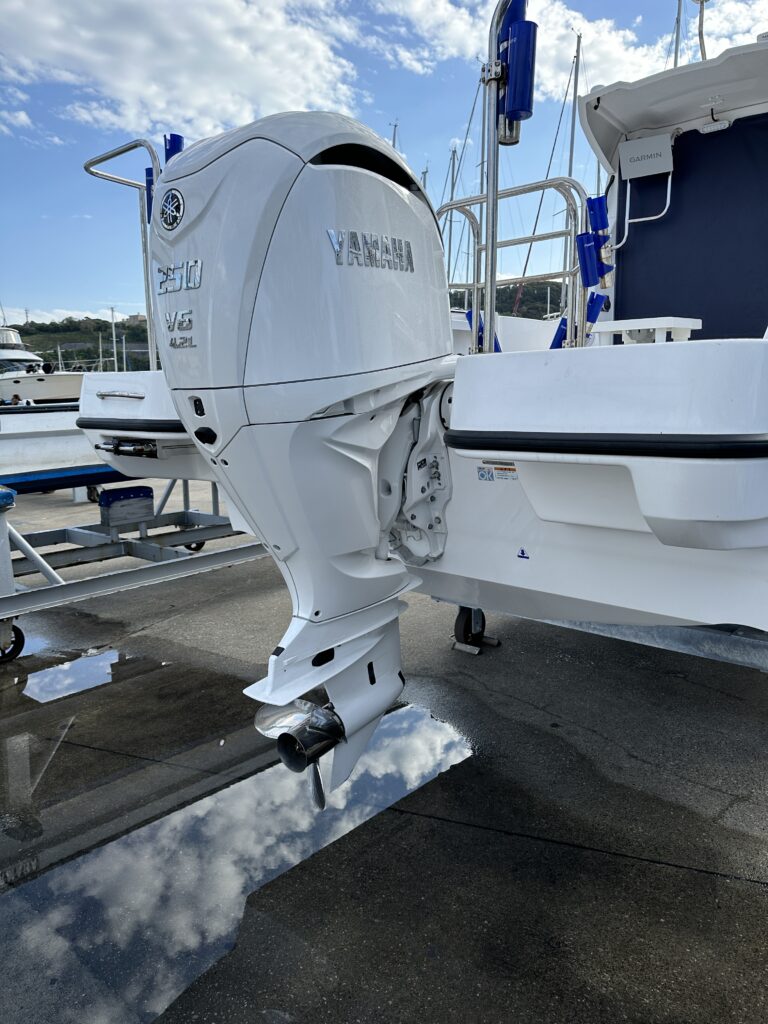
Photo 2 shows a boat stored on land with three outboard engines.
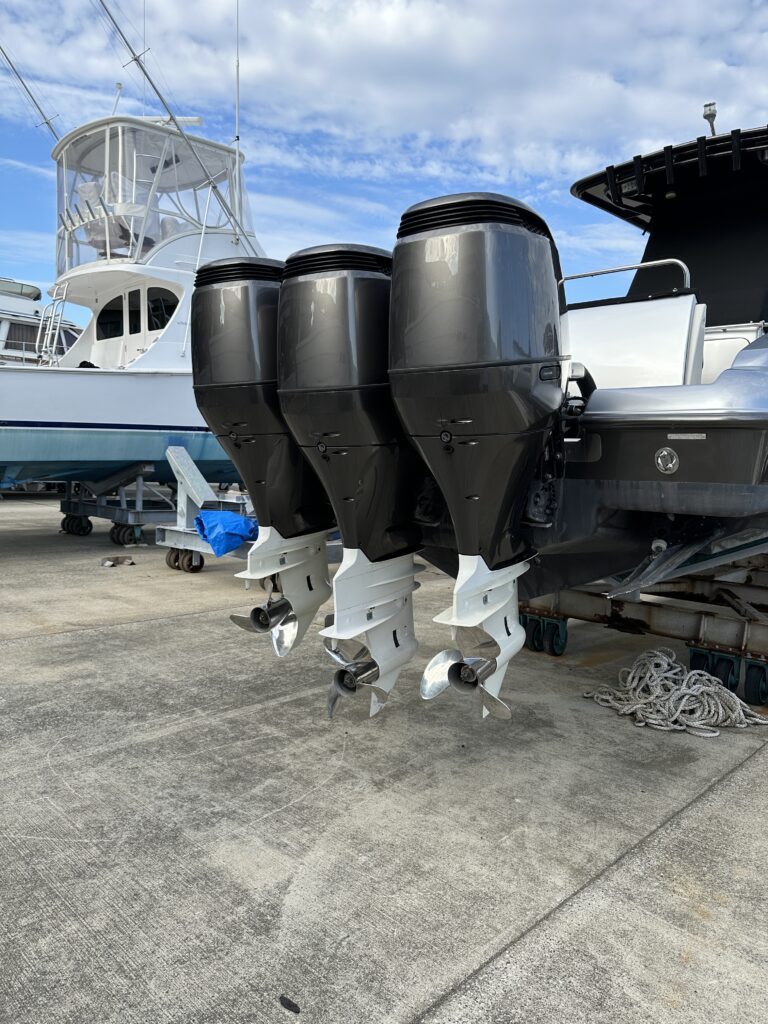
In multiple-engine installations, propeller rotation may be arranged in opposite directions to balance rotational effects.
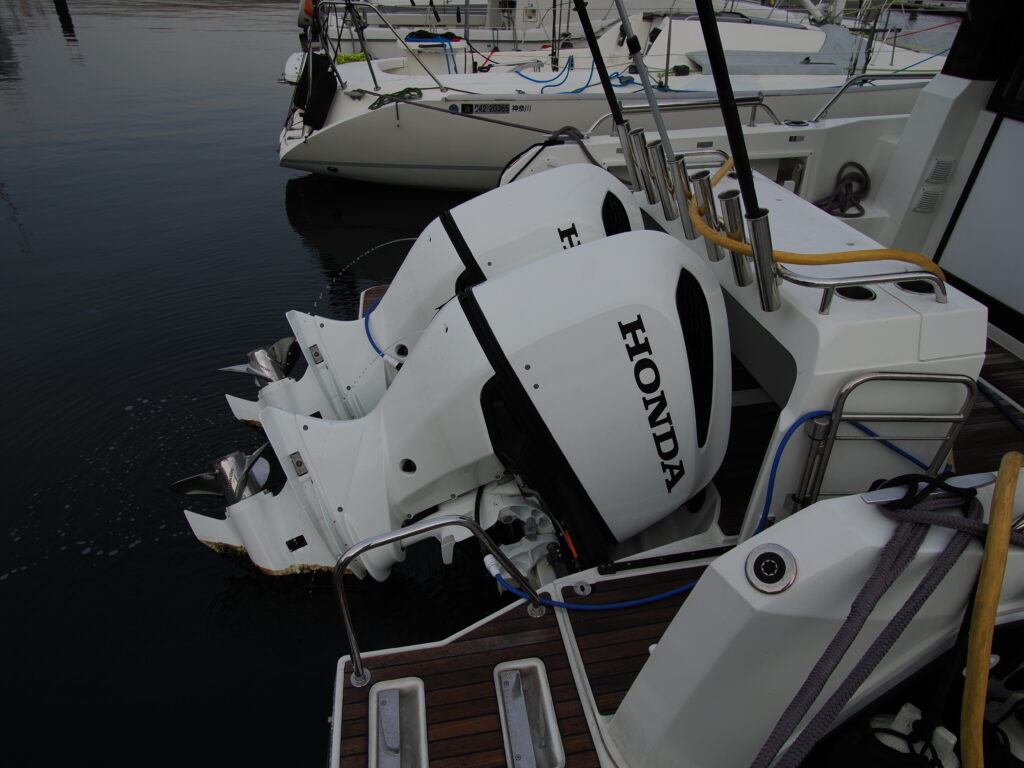
Photo 3 shows twin outboards on a boat kept in the water. Both engines have been tilted upward so that the propellers and lower units are largely clear of the seawater.
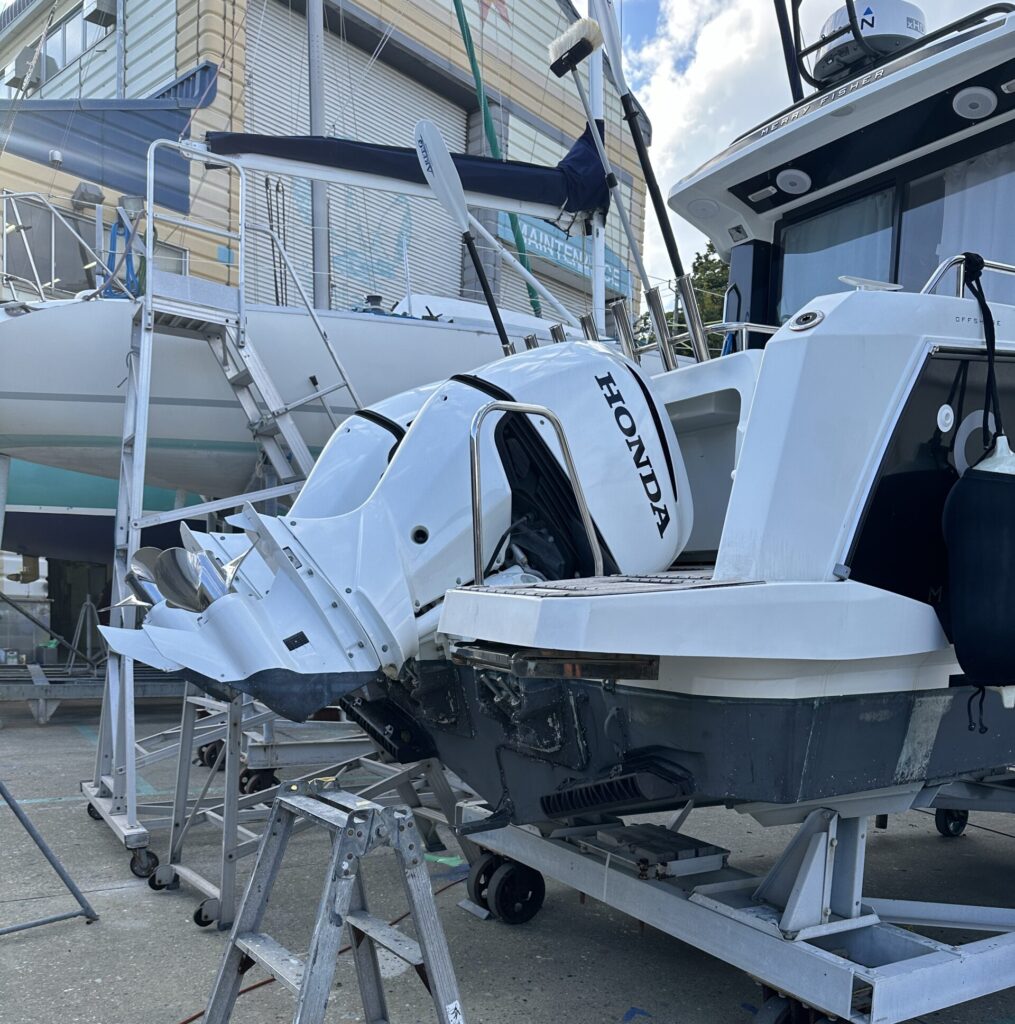
When the same boat is stored on land, the engines look like this in the tilted position.
Advantages of Outboards
- Excellent maneuverabilityBecause the propeller thrust itself changes direction when the engines turn, outboards respond well during low-speed maneuvering.Modern hydraulic, electro-hydraulic, electric steering, joystick control, and independently steerable multiple-engine systems can make large outboard boats surprisingly easy to handle.
- Easy access for maintenance and repairMuch of the propulsion system is outside the hull and directly accessible.
- Relatively easy repoweringReplacing an old outboard with a new one is often much simpler than replacing an inboard engine buried inside the hull.
- The lower unit can be lifted out of seawaterThis is a major advantage for boats kept in saltwater because it can reduce corrosion and marine growth.
- A rope around the propeller may be easier to deal with offshoreIf conditions allow, the engine can be tilted upward and the propeller brought closer to the surface.That does not make every entanglement easy or safe, but it can be a major advantage compared with a fixed shaft-drive propeller.
- Well suited to planing boatsOutboards are widely used on fast planing hulls, from relatively small boats to surprisingly large offshore boats.
- Fewer underwater propulsion-system penetrations through the bottom of the hullA conventional propeller shaft does not have to pass through the hull below the waterline.
Disadvantages of Outboards
- The engines occupy the sternLarge outboards can take up valuable transom space.This matters when swimming, boarding, handling fishing gear, or landing a large fish.
- Fishing lines must be managed around the propellersWhen fighting a large fish, particularly while trolling offshore, the angler must remain aware of the position of the engines and propellers.Compared with a conventional inboard shaft-drive boat, the stern can be more crowded and the line may be more likely to come close to the propellers.
- Most high-output models use gasolineMany larger conventional inboard boats use diesel engines instead.This does not mean that outboards are automatically expensive to run. Actual fuel cost depends on engine efficiency, hull design, boat weight, cruising speed, local fuel prices, and many other factors.
- Multiple large outboards can become mechanically and financially substantialModern outboards are extremely capable, but triple, quadruple, or larger installations involve several complete engines, with corresponding purchase and maintenance costs.
- Pre-departure and post-use care can take some effortRelated articles:Checking Outboard Engine Oil Before Departure Can Be More Work Than You ThinkOutboard Engine Maintenance Before Departure and After Returning to Port
Are Outboards Only for Small Boats?
Not anymore.
Modern high-horsepower outboards have greatly expanded the size of boats that can use them.
Large offshore boats with three, four, or even more outboards are now common in some markets, particularly in North America.
Conventional diesel inboards still remain important for very large boats, long-range cruising, heavy-duty operation, and other applications where their characteristics are attractive.
But it is no longer accurate to say simply that outboards are unsuitable for large pleasure boats.
Modern outboard design has changed that assumption considerably.
One particularly interesting example is the Mercury V12 Verado.
Conventional outboards steer by turning much of the engine assembly. The V12 Verado uses a very different arrangement: its powerhead remains fixed while the lower gearcase turns.
I discuss that unusual design in another article:
Mercury Verado V12 600hp ★ The Outboard That Broke the Rules—and Where It Stands Today
For more about multiple-outboard installations, see:
Advantages and Disadvantages of Twin Outboard Engines
Inboard Engines with Shaft Drive
A conventional inboard shaft-drive boat has its engine inside the hull.
Depending on the boat, the engine may be positioned near the center of the hull or farther aft.
Power is transmitted from the engine through a propeller shaft that passes through the hull and connects to a propeller outside the boat.
Diesel engines are widely used, particularly in larger pleasure boats.
This propulsion system has been used for a very long time. Its technology is mature, mechanically straightforward, and well understood.
Another important characteristic is the separation of propulsion and steering.
The propeller remains in a fixed position relative to the hull, while a separate rudder changes the direction of water flow and turns the boat.
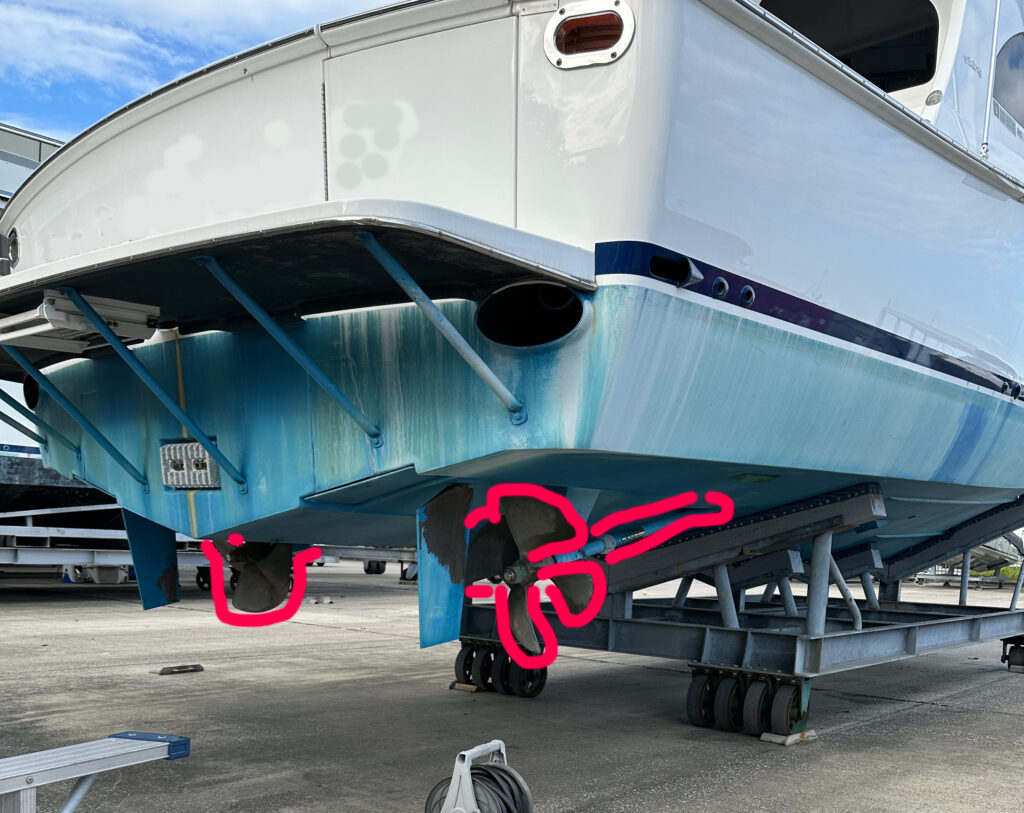
Photo 5 shows a typical inboard shaft-drive installation.
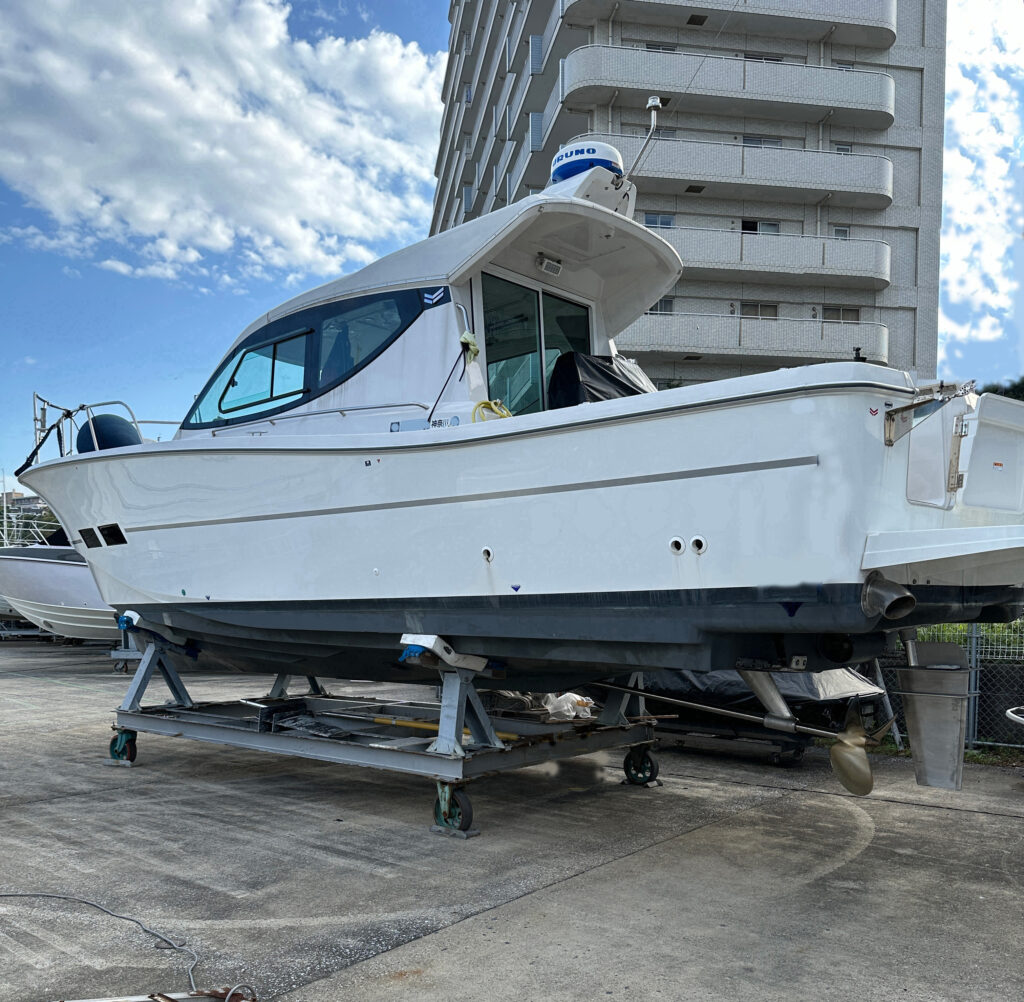
The engine is installed inside the hull, and the propeller shaft passes through the hull to the propeller.
To make the arrangement easier to identify, Photo 6 shows the shaft and propeller outlined in red.
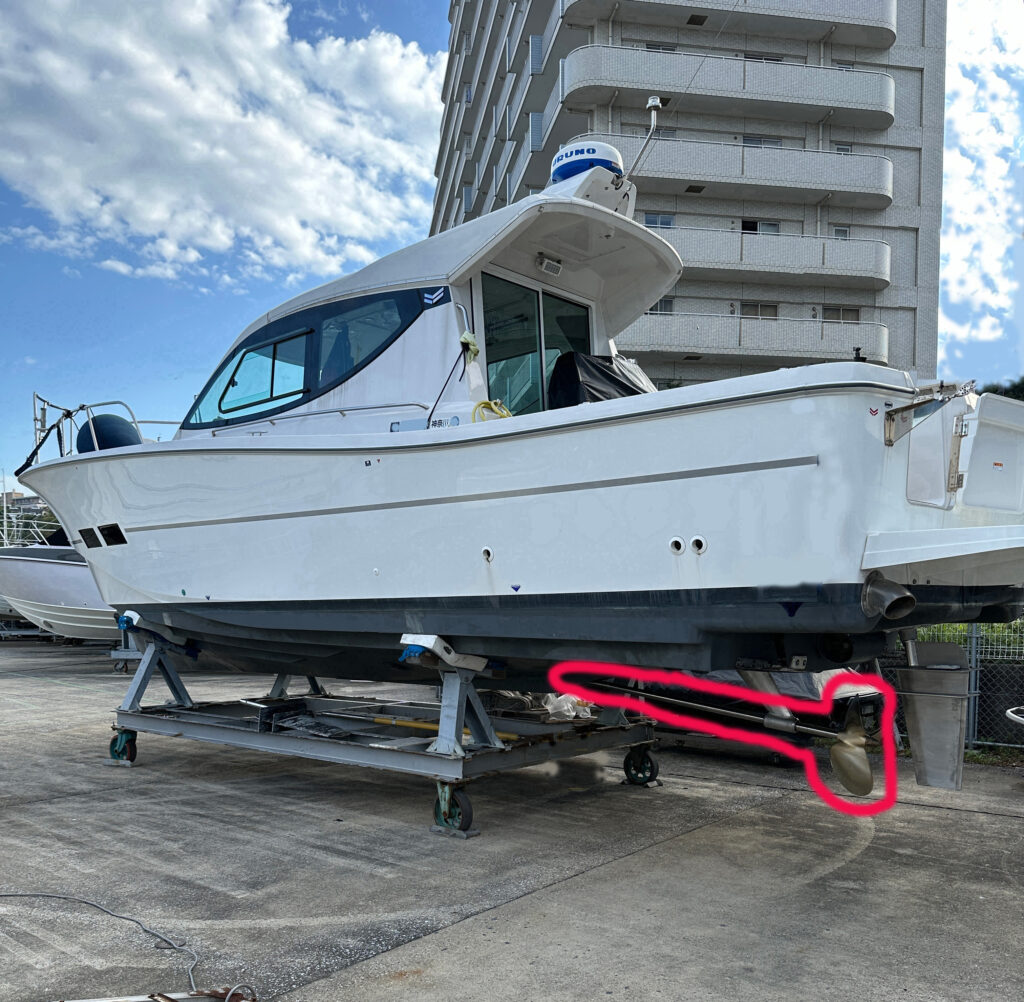
Photo 7 provides a closer view of the same area.
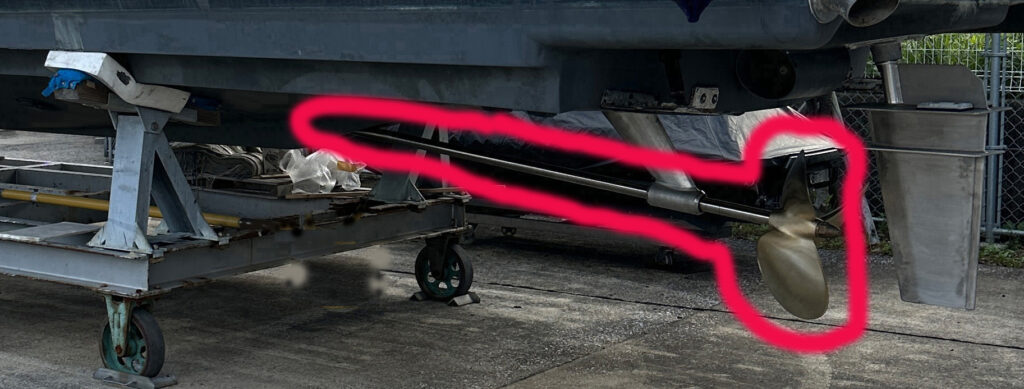
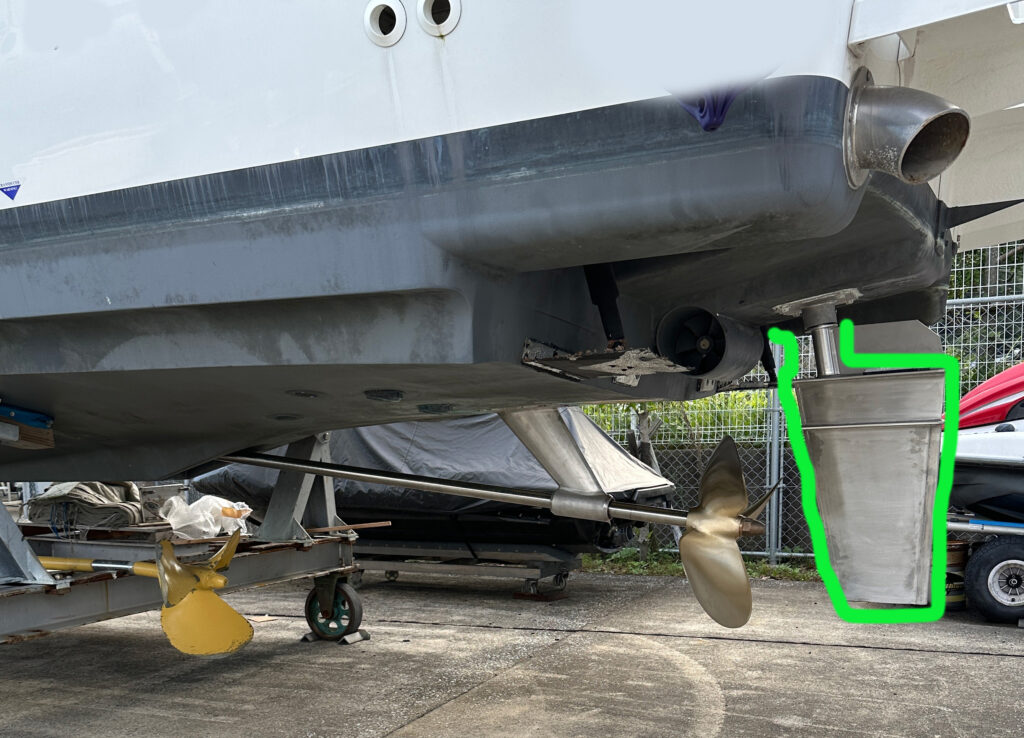
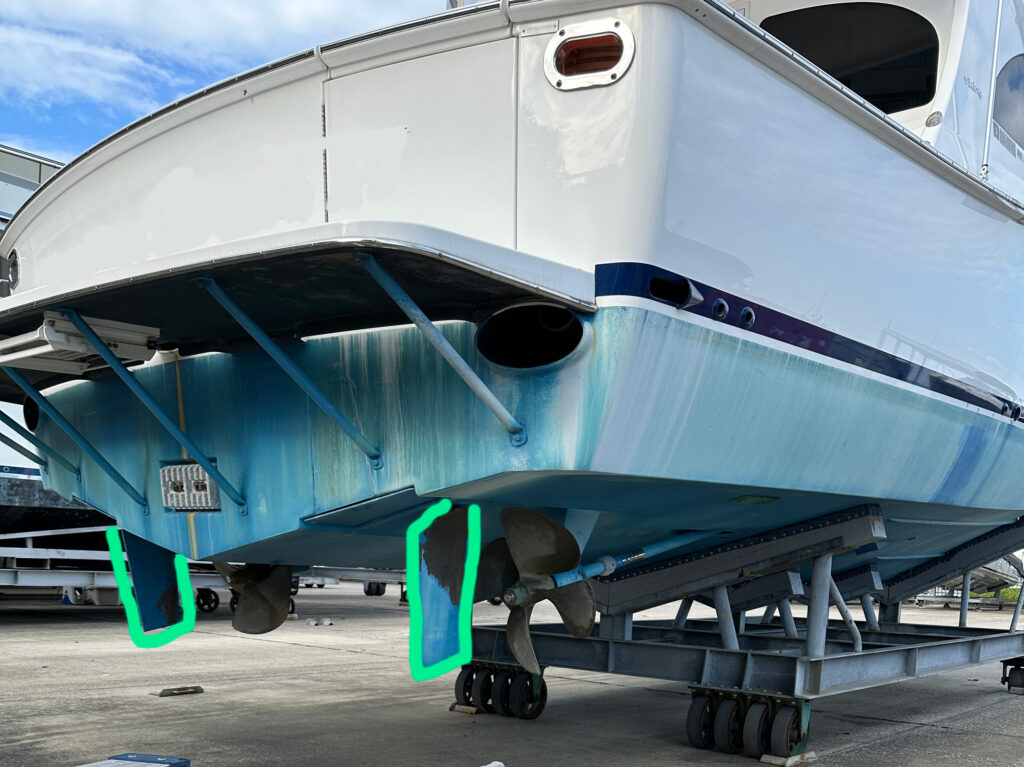
Photo 8 shows the separate rudder, outlined in green.
This is one of the easiest ways to distinguish a conventional shaft-drive boat from an outboard or sterndrive boat.
Inboard boats can also have two engines, two shafts, and two propellers.
The shaft and propeller nearest the camera are easy to see. On the opposite side, only a small part of the second shaft and propeller is visible.
As with a single-shaft boat, steering is handled by separate rudders.
They are outlined in green in Photo 10.
In a conventional shaft-drive system, the propeller does not turn from side to side.
It remains in a fixed position and produces thrust along a fixed axis.
The boat changes direction using the rudder.
This separation between propulsion and steering is mechanically simple and has been refined over many decades.
That long history and mechanical maturity are among the greatest attractions of the system.
There is, however, an important practical disadvantage.
If a thick rope becomes tightly wrapped around the propeller of a single-engine shaft-drive boat, the boat can lose propulsion.
Because the propeller cannot be tilted toward the surface, removing the rope may require someone to enter the water and work beneath the boat.
Offshore, particularly when boating alone, that can become a serious safety problem.
Advantages of Inboard Shaft Drive
- Low and relatively central engine placement can contribute to favorable weight distributionThe heavy engine is inside the hull rather than hanging from the transom.
- Well suited to large marine diesel enginesThe engine compartment can accommodate engines that would be difficult to package as outboards.
- Simple and mature mechanical architectureConventional shaft drives have a long history and an excellent reputation for durability when properly installed and maintained.
- Very suitable for heavy-duty operation and long-range cruisingThis is one reason shaft-drive diesel installations remain common in larger boats.
- Excellent stern access for serious fishingThere are no large outboard engines hanging from the transom.For trolling and fighting large game fish, this unobstructed stern can be a major advantage.If my main purpose were offshore big-game fishing, I would personally consider a conventional shaft-drive boat one of the strongest choices.
Disadvantages of Inboard Shaft Drive
- Not ideal for shallow waterThe shaft, propeller, and rudder project below the hull and cannot simply be tilted out of the way.
- Grounding can cause serious damageThe propeller may be damaged, the shaft can bend, and related underwater components can also be affected.I discuss this in more detail here:What Is an Inboard Shaft-Drive Boat? Structure, Characteristics, Advantages and Disadvantages
- Engine noise may be more noticeable inside the boatBecause the engine itself is inside the hull, its location and sound insulation have a large effect on cabin and helm noise.
- Engine access can make major repairs difficultThe degree of difficulty depends greatly on the design of the engine room and surrounding interior.
- The propeller shaft must pass through the hullThe shaft penetration must remain watertight.Failure of the shaft seal or related components can allow water into the boat.
- Low-speed handling, especially in reverse, can require more skillA rudder works differently from a steerable propeller.In reverse, water flow over the rudder may be less effective, and propeller walk can also influence the direction of the stern.Close-quarters docking can therefore require practice.Bow and stern thrusters can greatly reduce this disadvantage.
- A rope around the propeller can be difficult to removeOn a single-engine boat, severe propeller fouling can cause complete loss of propulsion.If the obstruction cannot be cleared from inside the boat, entering the water may be necessary.Doing so offshore while alone can be extremely dangerous.
Sterndrives — Inboard/Outboards
A sterndrive, also called an inboard/outboard or I/O, combines characteristics of both inboard and outboard propulsion.
The engine is installed inside the hull, usually near the stern.
Power passes through the transom to an external drive unit carrying the gearbox and propeller.
Both gasoline and diesel engines are used, depending on the boat and market.
Like an outboard, a sterndrive changes direction by turning the external drive unit from side to side.
The propeller thrust therefore changes direction directly with steering input.
The drive can also be trimmed or tilted upward.
This gives a sterndrive more flexibility in shallow water than a conventional fixed shaft drive.
However, unlike an outboard, the complete external mechanism generally cannot be lifted entirely clear of the water while the boat remains afloat.
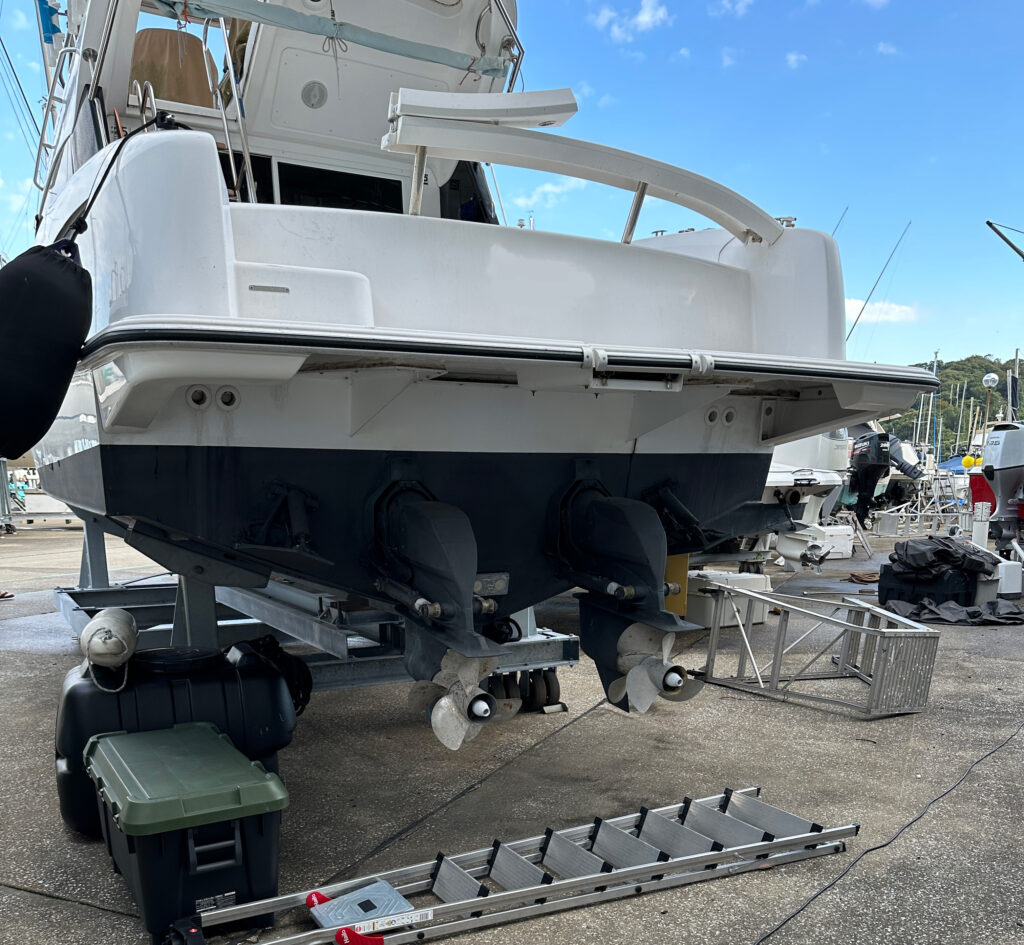
The external drive mechanism can be difficult to identify if you are unfamiliar with it.
Photo 12 shows the drive outlined in red.
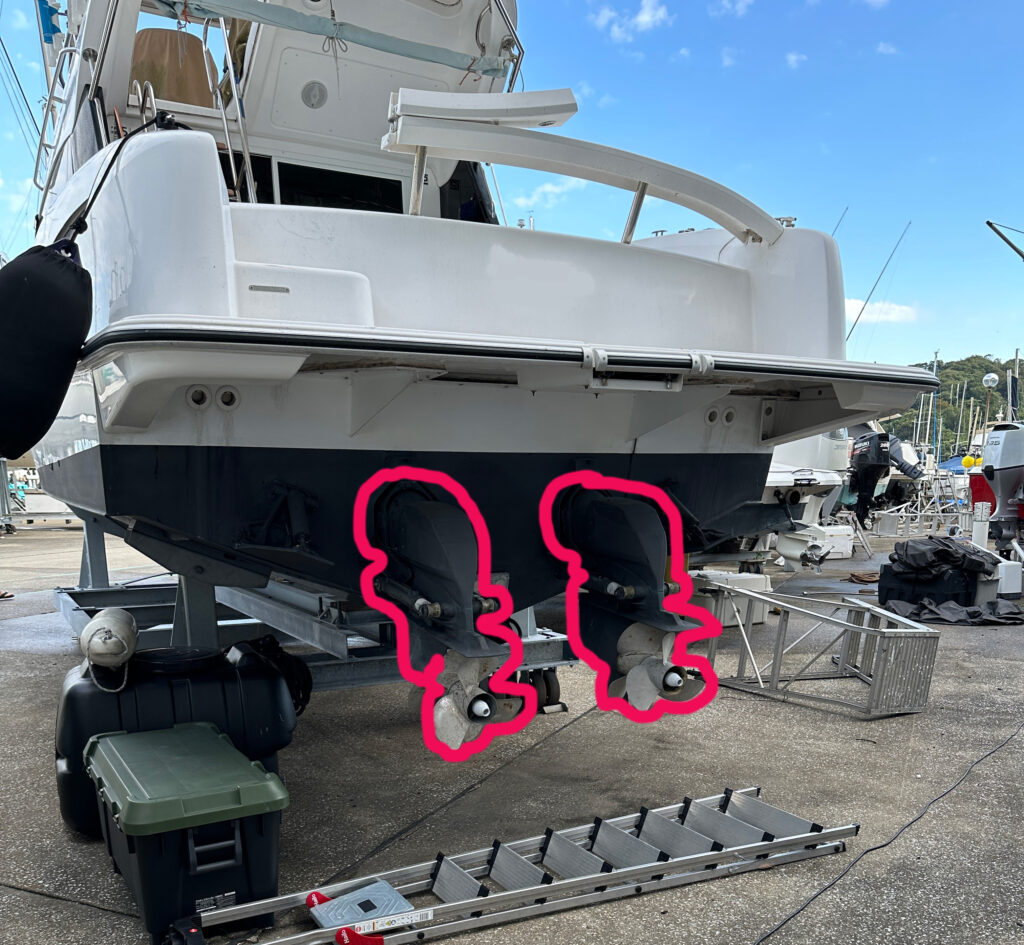
The drive transfers engine power from inside the hull to the propeller.
The entire drive unit turns from side to side when steering.
Advantages of Sterndrives
- The engine remains inside the hullThis allows the boat builder to use automotive-style gasoline engines or marine diesel engines depending on the design.
- Good maneuverabilityAs with an outboard, steering changes the direction of propeller thrust directly.
- The drive can be raisedThis provides more flexibility in shallow water than a conventional shaft-drive installation.It may also bring the propeller close enough to the surface to make removal of fishing line or rope easier in some situations.
- The stern can remain relatively openBecause no large outboard engine is mounted directly on the swim platform or central transom area, designers can create a broad, clean stern.This is particularly attractive for family boats used for swimming, watersports, and relaxing at anchor.
- Large swim platforms are easier to designThis is one of the practical reasons sterndrives remain attractive on many recreational boats.
- Contra-rotating propeller systems are availableSome sterndrives use two propellers on the same axis rotating in opposite directions.These systems can provide strong thrust, good acceleration, and efficient control.
Disadvantages of Sterndrives
- The underwater mechanism is relatively complexCompared with a simple shaft and rudder arrangement, the sterndrive contains gears, bearings, seals, joints, and other moving components close to or below the waterline.
- Continuous saltwater exposure can increase maintenance demandsCorrosion, marine growth, anodes, seals, bellows, and other underwater components require careful inspection.For a boat permanently kept in seawater, this deserves particular attention.
- The drive cannot normally be lifted completely clear of the waterThis is an important difference from an outboard.
- The transom penetration must remain watertightPower passes from the engine through the transom to the external drive.Seals, bellows, and related components are therefore critical.Failure can lead to water ingress.
- Condition matters greatly when buying usedA well-maintained sterndrive can work very well.A neglected sterndrive, particularly one that has spent years in saltwater, can also hide expensive problems.For a first-time buyer considering a used boat, the maintenance history of the drive deserves careful inspection.
Outboard vs Inboard vs Sterndrive: Quick Comparison
The following table summarizes the structural differences.
| Feature | Outboard | Inboard Shaft Drive | Sterndrive |
|---|---|---|---|
| Engine location | Outside hull | Inside hull | Inside hull |
| Propeller location | Outside hull | Outside hull on fixed shaft | Outside hull on drive unit |
| Steering | Propeller thrust turns with engine | Separate rudder | Propeller thrust turns with drive |
| Can propulsion unit be raised? | Yes | No | Partly |
| Can propeller usually be lifted clear of water while afloat? | Yes | No | Usually no |
| Shallow-water flexibility | High | Low | Moderate to high |
| Easy engine access | Generally high | Depends on engine room | Moderate |
| Repowering | Relatively easy | Usually more involved | More involved than outboard |
| Fixed underwater shaft | No | Yes | No |
| Separate rudder | Normally no | Yes | Normally no |
| Large open stern for fishing | Less favorable | Very favorable | Favorable |
| Large swim platform | More difficult | Easy | Easy |
| Common large diesel application | Limited | Very common | Available |
| Rope around propeller accessible from surface | Often easier | Usually difficult | Sometimes easier |
| Permanently exposed underwater drive mechanism | Lower unit can be raised | Shaft, propeller and rudder remain underwater | Much of drive remains underwater |
This table should not be treated as a ranking.
The important point is that most advantages and disadvantages come directly from where the engine is installed, where the propeller is located, whether the propulsion unit can move, and whether it can be lifted out of the water.
Which Propulsion System Is Best for Your First Boat?
There is no universal answer.
Instead of asking which system is best, it is more useful to ask what each mechanical layout means for the way you will actually use the boat.
If you regularly operate in shallow water, want easy access to the engine, or keep the boat in saltwater and value the ability to lift the propellers clear of the sea, the advantages of an outboard become obvious.
If you want a robust diesel installation, an unobstructed stern, or a conventional propulsion system with a long history in larger boats and offshore fishing, a shaft-drive inboard has strong advantages.
If swimming, watersports, and a large open swim platform are important, while you still want direct propeller-thrust steering and an engine inside the hull, a sterndrive can be very attractive.
But these are tendencies, not rules.
A large offshore fishing boat can use multiple outboards.
A family cruiser can use shaft drives.
A sterndrive can be used in saltwater if it is maintained appropriately.
The better approach is to understand the mechanism first.
Once you understand what is physically beneath and behind the boat, many of the practical differences become much easier to predict.
Technical Note: Contra-Rotating Propellers
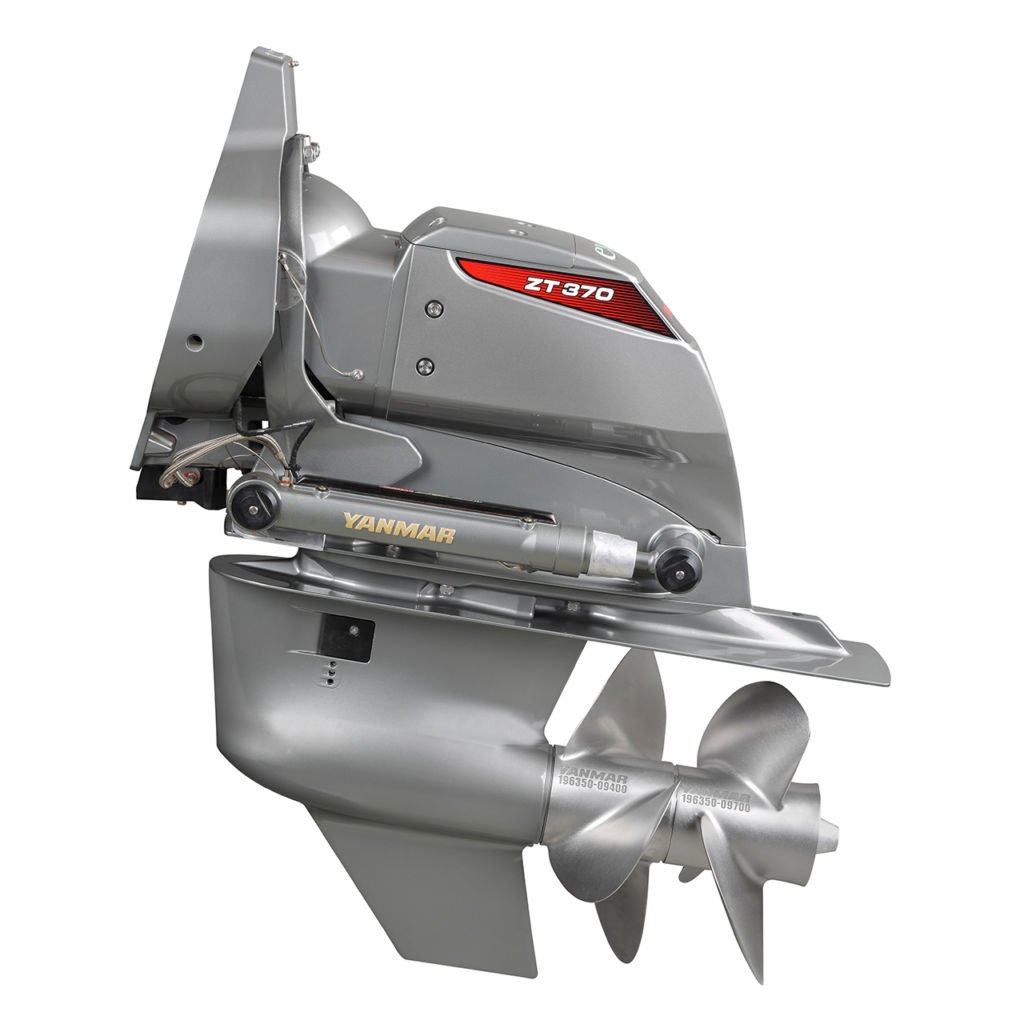
The sterndrive shown in Photos 11 and 12 uses a contra-rotating propeller system.
Two propellers are mounted on the same axis and rotate in opposite directions.
This arrangement allows the propulsion system to make effective use of the rotational energy in the water and can improve thrust, acceleration, efficiency, and handling.
Photo 13 shows this mechanism more clearly.
Contra-rotating propellers are not limited to sterndrives.
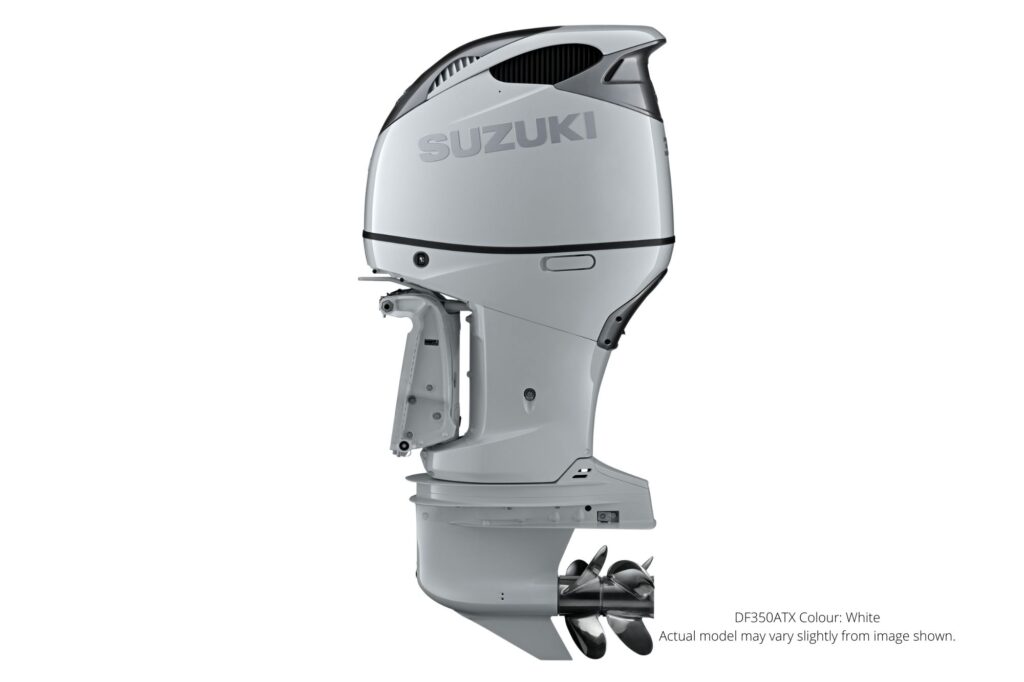
Some modern outboards use the same basic principle.
Photo 14 shows a Suzuki outboard equipped with a contra-rotating propeller system.
Other manufacturers also use similar concepts in some propulsion systems.
For someone choosing a first boat, however, the important point is not simply whether the boat has one propeller or two.
The more fundamental question is still the same:
Where is the engine, where is the propeller, how is thrust directed, and what parts of the propulsion system remain underwater?
Understanding those four points makes the differences between outboards, conventional inboards, and sterndrives much easier to understand.
Want to know more about the author and the thinking behind this site?
→ About Rikutsu-Kone-Taro
