Something I noticed while wearing polarized sunglasses
Polarized sunglasses are extremely useful for reducing glare reflected from water and road surfaces, making it easier to see in bright outdoor conditions. That is why they are so popular for activities such as fishing and driving.
I use polarized sunglasses regularly myself.
After using them for a while, I noticed something odd.
Some displays can become so dark through polarized sunglasses that they are almost impossible to see.
What really brought this to my attention was an LCD sign I saw in town.
An LCD sign became almost invisible
One day, while wearing polarized sunglasses, I looked at an LCD sign and found that the screen was almost impossible to see.
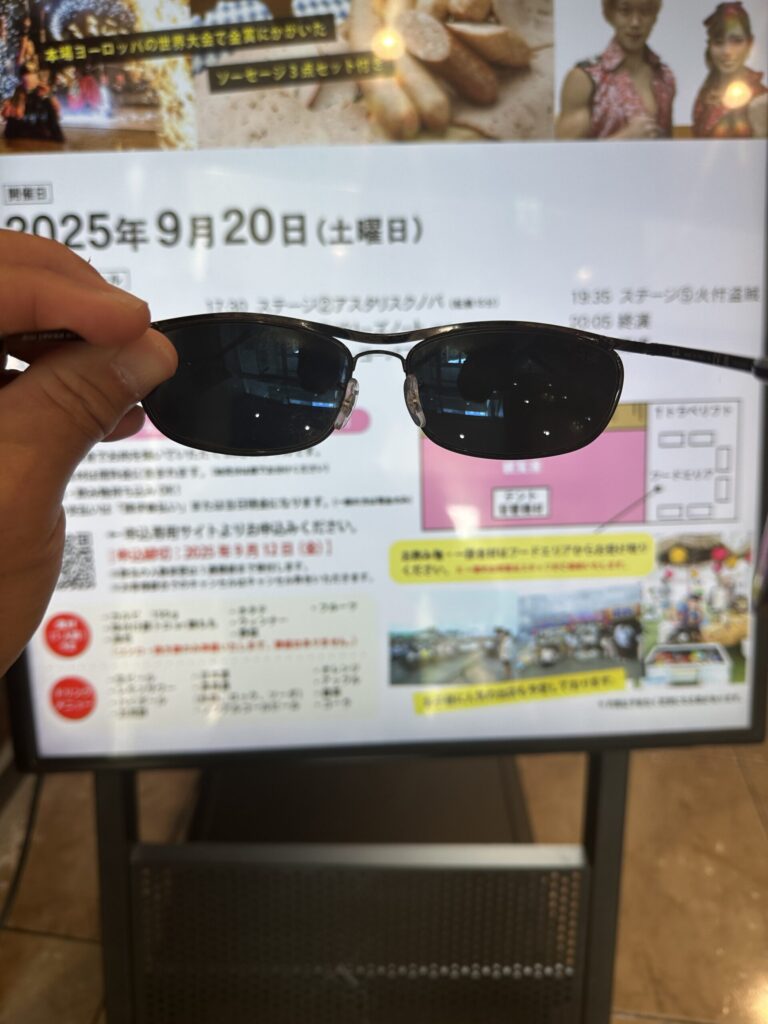
With the polarized sunglasses in their normal position, the LCD sign is almost invisible. If I had been using this sign as a landmark, I might have missed it.
When I rotated the sunglasses by 90 degrees, the screen became much brighter and easier to see.
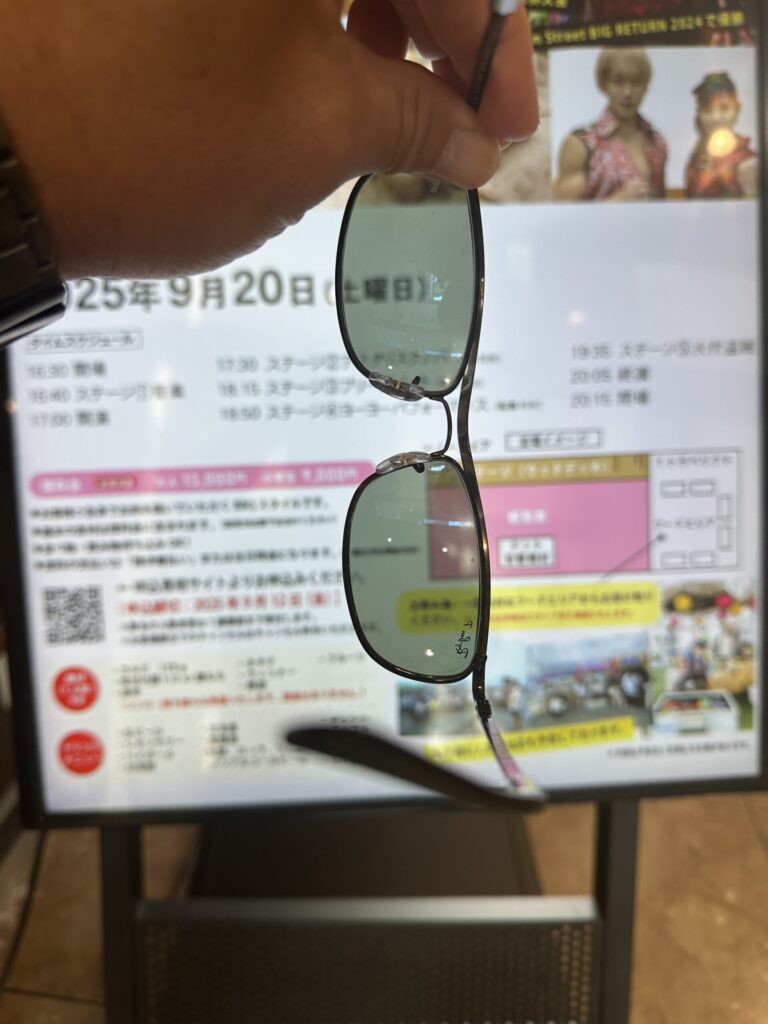
This experience made me realize that wearing polarized sunglasses can create a risk of missing important information.
If you already know that an LCD sign is there, you are likely to notice that it looks unusually dark.
In an unfamiliar place, you may walk past a display without realizing that anything is shown there at all.
LCD displays are widely used for road information, facility guidance, store signs, transportation information, and many other purposes.
With polarized sunglasses, some of that information can effectively disappear from view.
Smartphone screens can also look different depending on orientation
Smartphone displays can also change in appearance when viewed through polarized sunglasses.
In my own case, the phone remains usable, but there is a noticeable difference in brightness and visibility depending on whether I hold it vertically or horizontally.
Smartphones are frequently used outdoors for navigation, checking locations, viewing reservations, displaying tickets, and accessing other important information.
If you regularly wear polarized sunglasses outdoors, it is worth checking how your own phone screen looks through them.
Face ID does not work with my iPhone
I have also experienced another problem with my iPhone.
When I wear my polarized sunglasses, Face ID does not work and the phone does not unlock.
As soon as I remove the sunglasses, Face ID works again.
This is a separate issue from screen visibility, but it is another inconvenience I encounter when using my iPhone while wearing these sunglasses.
Apple notes that Face ID works with many sunglasses, but some sunglasses designed to block certain types of light may block the infrared used by the TrueDepth camera.
When I want to unlock my iPhone with Face ID outdoors, I have to remove the sunglasses for authentication and then put them back on.
My car navigation display is clearly visible when I wear my polarized sunglasses in their normal position.
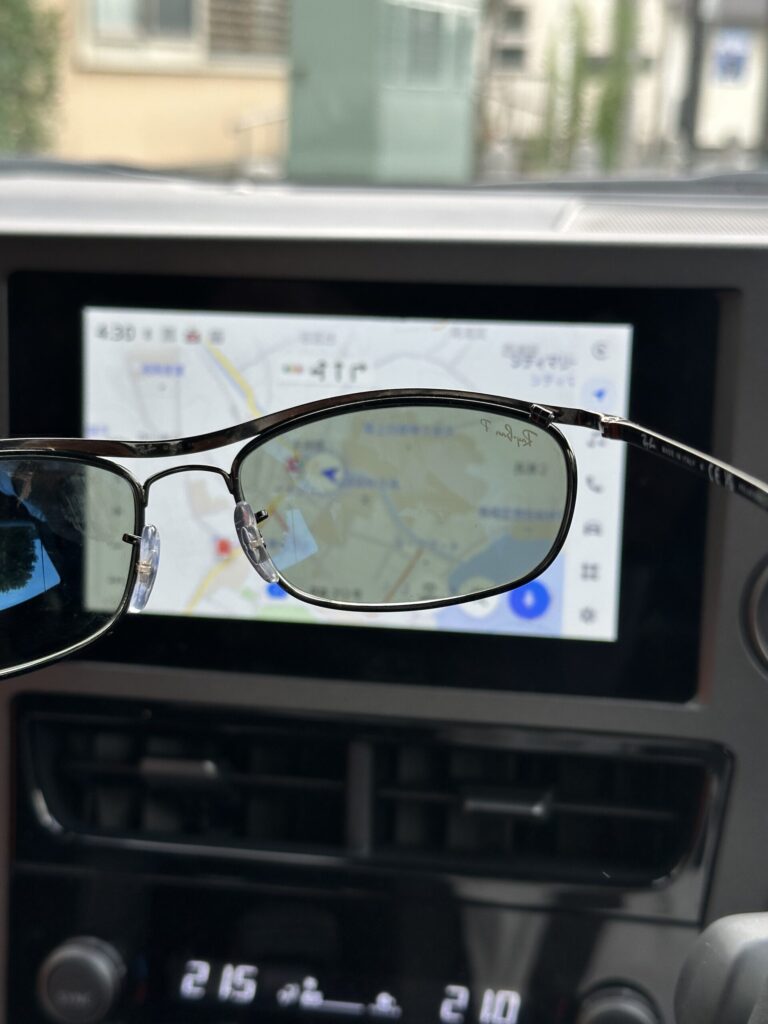
The car navigation display is clearly visible in this orientation.
When I rotate the sunglasses by 90 degrees, however, the screen becomes almost completely invisible.
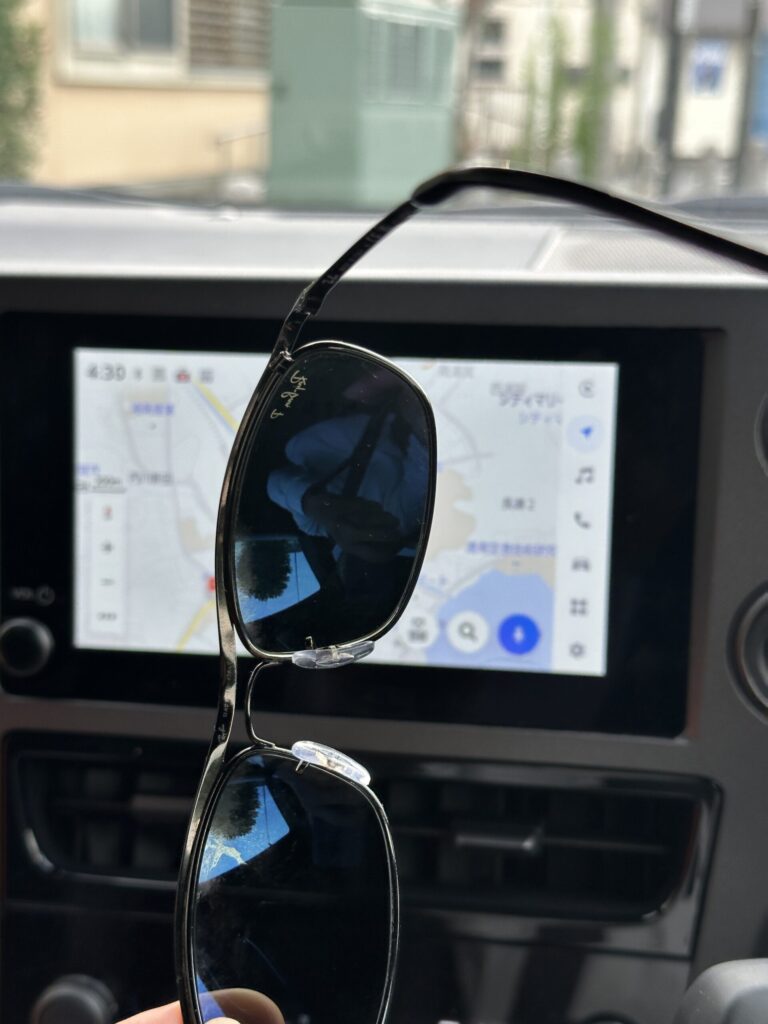
Rotating the sunglasses by 90 degrees makes the car navigation display almost completely invisible.
With the LCD sign:
normal orientation → difficult to see
90-degree rotation → easy to see
With my car navigation display:
normal orientation → easy to see
90-degree rotation → difficult to see
The same pair of polarized sunglasses can therefore produce very different results depending on the display.
Why does this happen?
The reason lies in the direction of polarization.
LCD displays use polarized light to produce an image. Polarized sunglasses also contain a filter that allows light oriented in a particular direction to pass through.
Depending on the relationship between the polarization of the light coming from the display and the transmission axis of the sunglasses, the amount of light reaching your eyes can change dramatically.
That is why simply rotating polarized sunglasses can make a screen suddenly appear much darker or much brighter.
Similar visibility problems can also occur with OLED displays that use polarizing layers.
Other displays may be affected as well
I have personally observed changes in screen visibility with an LCD sign, a smartphone, and a car navigation display.
Many other displays around us can also be affected by polarization, including:
- computer monitors
- dashboard displays
- information screens at railway stations and airports
- digital displays in stores and public facilities
- marine chartplotters and instrument panels
- industrial and professional display equipment
The effect varies with the display and its polarization direction.
With a familiar device, you already know that the screen is there, so an unusual change in visibility is easier to notice.
Unfamiliar displays deserve more attention.
If you do not already know that information is being displayed in front of you, you may not realize that your sunglasses are making it difficult to see.
It is worth knowing that polarized sunglasses can make information disappear
During everyday use, I have experienced several unexpected effects while wearing polarized sunglasses:
- an LCD sign becoming almost invisible
- a smartphone screen changing in visibility depending on orientation
- Face ID failing while I am wearing my sunglasses
- a car navigation display becoming almost invisible at a particular angle
It is worth checking the smartphones, navigation systems, and other displays you regularly use while wearing your polarized sunglasses.
When encountering unfamiliar displays in town or while traveling, simply knowing that polarized sunglasses can sometimes make displayed information difficult to see may help prevent you from missing something important.
Polarized sunglasses are extremely useful for reducing glare outdoors. Their interaction with displays, however, can make information that should be visible disappear from view.
Explore Other Subjects
These automotive articles are one part of a broader collection covering boating, fishing, photography, technology, human behavior, history, and life decisions.
English Articles : A Topic-by-Topic Guide to This Site
Want to know more about the author and the thinking behind this site?
→ About Rikutsu-Kone-Taro
